The major international fireworks competitions to know
From Montreal to Cannes, from Tarragona to Da Nang, fireworks competitions bring together the greatest pyrotechnic houses every summer. A look at the events where fireworks become a total art form, judged as much on emotion as on precision.
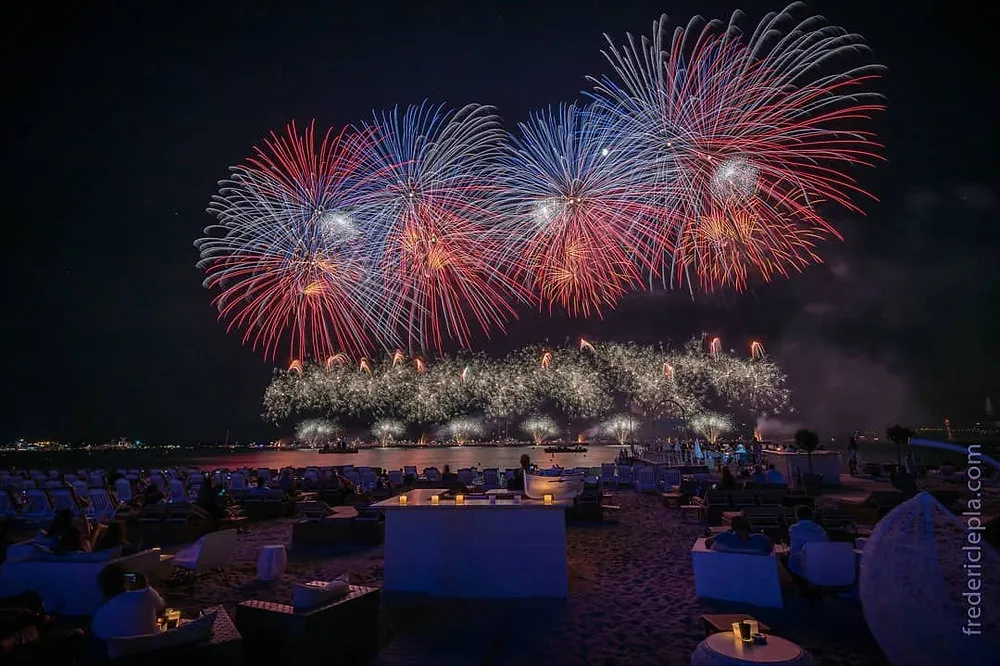
With fine weather, summer nights take on a new dimension. Across bays, beaches, rivers and historic gardens, the world’s greatest pyrotechnicians gather for competitions where every second counts. A fireworks competition is not simply a succession of luminous bouquets: it is a timed work of art, designed for a specific site, written to a soundtrack, and judged on coherence, rhythm, palette, boldness and the ability to create a shared emotion. From Europe to Asia, from North America to the Mediterranean, these events draw a true world map of pyrotechnic art.
A pyrotechnic competition, far more than a show
The difference between a national-day fireworks display and an international competition lies first in artistic rigour. Teams do not come merely to fire off a spectacular program: they defend a writing style, a culture, a signature. The best competitions often impose a theme, a duration, safety constraints and sometimes mandatory music. The jury observes synchronisation, the variety of effects, how the space is used, the clarity of the tableaux, the quality of the transitions and the power of the finale. The audience judges with its eyes, but above all with its memory: a great fireworks display is recognised by what it leaves behind after the last detonation.
This competitive logic is at the heart of many international events, including Masters de Feu in Compiègne, where the excellence of the fireworks houses is part of a recognition journey leading to Silver Master, Gold Master and then Platinum Master. Around the world, other prestigious competitions pursue the same goal: bringing together technical know-how, musical dramaturgy and popular emotion.
Montréal, the great North American pyromusical stage
In Montréal, L’International des Feux Loto-Québec has established itself as one of the major events on the global pyrotechnic scene. The fireworks are launched from La Ronde, on Île Sainte-Hélène, and unfold above the Saint Lawrence River, with the silhouette of the Jacques Cartier Bridge as an urban backdrop. The pyromusical format plays a central role here: for nearly half an hour, the pyrotechnicians must build a visual score capable of conversing with the music and remaining legible on a grand scale, both from the stands and from the city’s many viewpoints.
Montréal’s strength lies in this rare alliance of top-level competition and broad popular appeal. The show can be seen from several districts, discussed, compared and shared. For the participating houses, it is an international showcase: they demonstrate their computer precision, the subtlety of their sequences and their ability to sustain a narrative over time.
Cannes, pyrotechnic elegance facing the Mediterranean
On the French Riviera, the Festival d’Art Pyrotechnique de Cannes turns the bay into an open-air theatre each summer. La Croisette, the beaches and the heights become the natural stands for a competition where the beauty of the site raises the bar even further. Here, the sea acts as a mirror, amplifying colours, delays, reflections and silences. The Cannes competition, established more than half a century ago, brings together international teams for highly anticipated evenings, often spread between July and August.
Cannes cultivates a highly artistic dimension of fireworks. The pyrotechnicians must work with the horizon, the scale of the bay and the expectations of a knowledgeable audience. The festival also values the spectator experience: the public can be involved in the evaluation through a dedicated prize, a reminder that pyrotechnic art is judged as much by professional criteria as by the intensity of a shared feeling.
Tarragona, Mediterranean tradition and the Venus trophy
In Catalonia, the Concurs Internacional de Focs Artificials Ciutat de Tarragona holds a singular place. Held every year at the beginning of July, it takes place from Punta del Miracle, facing the sea. Over several evenings, the competing teams seek to win the Venus de Tarragona trophy. The setting is spectacular, but so is the reward: the winner is also given the opportunity to design displays for the great Santa Tecla festivities, a central moment in Tarragona’s cultural life.
This combination of international competition and local tradition gives Tarragona a strong identity. Fireworks here are not just objects of admiration: they are part of a festive calendar, a collective memory, a city that knows its viewpoints and rituals. Spectators gather on the beach, the promenades, the harbour or the Balcó del Mediterrani, turning each evening into an urban celebration.
Hanover and Ostfildern, German precision in festival form
Germany has several renowned competitions, with two complementary approaches. In Hanover, the Internationaler Feuerwerkswettbewerb takes place in the Herrenhausen Royal Gardens. The venue imposes a particular aesthetic: baroque rigour, garden perspectives and architecture invite an elegant, structured, almost choreographic pyrotechnics. The selected teams present carefully synchronised shows set to music and a theme, in a heritage setting of great refinement.
In Ostfildern, near Stuttgart, the Flammende Sterne adopt a more festival-like atmosphere. Over three evenings, the public enjoys a complete program combining fireworks, music, entertainment, gastronomy and a family-friendly ambiance. The competition remains at the heart of the event, but it is set within a broader experience, where fireworks become the highlight of an outdoor evening. This formula shows how contemporary pyrotechnics can engage with the codes of the cultural festival.
Monaco and Knokke-Heist, two maritime settings for fireworks
The Concours International de Feux d’Artifice de Monaco is one of the great classics of the Mediterranean summer. Created in the 1960s, it has brought together many nations throughout its history and has established itself as a pyromelodic competition, where music is fully part of the composition. Port Hercule offers an ideal setting: water, façades, relief and the density of the crowd create a rare closeness to the spectacle.
Further north, Knokke-Heist hosts an International Fireworks Festival on the Belgian coast, staged by the beach. The shows, synchronised with music, are judged on criteria such as colour, composition, harmony, originality and precision. The seafront then becomes an open-air auditorium, where sand and promenade replace the stands.
Da Nang, the Asian rise of major competitions
In Vietnam, the Da Nang International Fireworks Festival illustrates Asia’s growing power in the world of major pyrotechnic events. The city has made it a major cultural and tourist gathering, with an international competition bringing together teams from several countries. For its 2026 edition, the event announces ten teams from nine countries and territories, with qualifying rounds followed by a final.
Da Nang shows another side of modern competitions: they are at once a contest for fireworks houses, an image-building tool for a destination and a major popular event. Fireworks become a city’s language, capable of telling a story of ambition, attracting visitors and creating a strong nocturnal identity.
A global geography of pyrotechnic emotion
This journey around the world reveals one certainty: every competition has its own personality. Montréal impresses with urban scale, Cannes with Mediterranean elegance, Tarragona with popular roots, Hanover with heritage refinement, Ostfildern with festival spirit, Monaco with maritime prestige, Knokke-Heist with seaside conviviality and Da Nang with international dynamism.
For enthusiasts, these competitions are laboratories. They reveal the trends of contemporary pyrotechnics: more precise effects, subtler colours, more musical sequences, greater attention to site integration and the spectator experience. Behind every salvo lie months of design, technical teams, a culture of mastered risk and artistic ambition. This is what makes major fireworks competitions far more than summer events: true international stages where, for a few minutes, the sky becomes the most spectacular blank page of all.