Interview with Frédéric Lepla: the art of photographing fireworks
Professional photographer based in Oise, Frédéric Lepla has established himself as a distinctive voice in pyrotechnic photography. In this interview, he shares his approach, scouting process, equipment choices, and what turns a fireworks display into an unforgettable image.
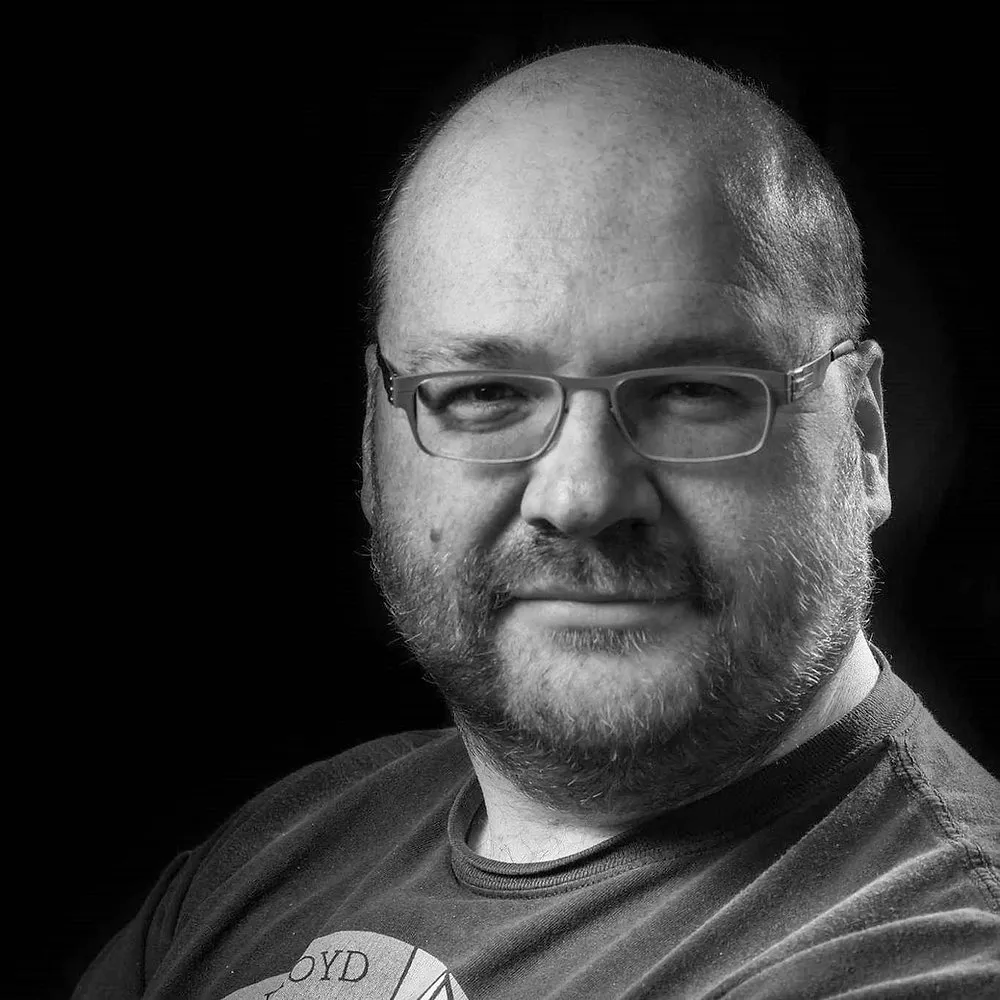
Photographing fireworks is not simply a matter of firing the shutter at the right moment against a lit-up sky. It means anticipating, composing, understanding the mechanics of a pyrotechnic show, and accepting that the final image is born from an event that will never be played again. A professional photographer since 2010, Frédéric Lepla has made this demanding discipline one of his signatures. Ahead of Masters de Feu 2019, he spoke to us about his journey, his techniques, and his memories of major shows around the world.
Fireworks, a childhood emotion turned visual language
For Frédéric Lepla, the power of fireworks lies first in their ephemeral nature. A shell bursts, unfolds, leaves a trail of light, then disappears. Photography steps in precisely in that interval: it preserves what the audience only glimpses. The photographer readily speaks of poetry, smoke, black powder, and colors that awaken a very simple sense of wonder, the one felt when watching the first rockets as a child.
But contemporary pyrotechnics no longer consist of a simple succession of colorful bursts. In major competitions and musical shows, emotion also comes from synchronization. An effect is not only beautiful in itself: it becomes stronger when it echoes a musical phrase, a shift in rhythm, or a silence. In Compiègne, this precision is part of the experience. Masters de Feu offers photographers an ideal setting: pyrotechnic storytelling, a large audience, a recognizable venue, and complete dramaturgy to capture in just a few seconds.
From generalist photographer to pyrotechnic specialist
Frédéric Lepla launched his professional activity in 2010. Like many independent photographers, he began by covering a variety of subjects: weddings, corporate events, concerts, reports. Gradually, one specialty emerged. A personal passion for fireworks, combined with the compatibility of nighttime shows with his way of working, led him to develop an increasingly precise eye for pyrotechnics.
The real turning point came in 2012, during a pyrotechnic show in Annecy. After his images were shared on social media, fireworks artists noticed his work. One thing led to another, and commissions multiplied. Based in the Oise, the photographer found himself documenting shows in France and abroad, with a dual requirement: produce a spectacular image while remaining faithful to the spirit of the show.
What truly sets pyrotechnic photography apart
Fireworks photography is built on a paradox. The show is fast, sometimes extremely dense, yet the image is created with long exposure times. Where a portrait may be frozen in a fraction of a second, a pyrotechnic photograph accumulates light over several seconds, and sometimes longer. The camera then records the trajectory, the blooming, and the lingering light of each effect.
The challenge is to fill the frame without overloading it. Too short an exposure does not tell enough of the story. Too long, and it burns the highlights, drowns the scene, and turns the delicacy of the fireworks into a confused mass. This is where the photographer’s experience comes in: knowing the different families of effects, anticipating the tableaux, and knowing when to open and when to end the exposure. Success depends less on chance than on a series of decisions made before and during the show.
Composing with the venue: the importance of Compiègne’s racecourse
Frédéric Lepla stresses one essential point: a fireworks photo is, first and foremost, a photograph. It therefore obeys the rules of composition, framing, and visual reading. A lit-up sky may be impressive, but it becomes more interesting when it is set within a backdrop. A monument, architecture, a horizon line, or a crowd provide scale and identity to the show.
In Brussels, the Atomium can turn a fireworks image into a photograph that is instantly anchored in place. In Compiègne, that role can be played by the grandstands of the racecourse. Their presence tells the story of Masters de Feu: a competition, an audience, a major popular and international event. Integrating the venue means avoiding a generic image. It makes you feel that this fireworks display took place in this exact location, in this exact atmosphere.
Equipment: stability before sophistication
In his approach, equipment remains a tool, never an end in itself. Frédéric Lepla worked with full-frame DSLRs before switching to more compact mirrorless cameras. The advantage is twofold: lighter gear for travel and the ability to use wide-angle lenses suited to expansive scenes. Very wide focal lengths make it possible to include the sky, the setting, and sometimes the crowd, without losing the scale of the pyrotechnic tableau.
Stability is central. With long exposures, the slightest vibration can compromise sharpness. A sturdy tripod therefore becomes essential. On a DSLR, mirror movement can cause micro-vibrations; on a mirrorless camera, that constraint disappears. But whatever the body, the goal remains the same: reduce camera shake, preserve the shape of the light trails, and achieve a clean, readable, controlled image.
Frédéric Lepla’s advice for successful fireworks photos
The first piece of advice is simple: do not shoot handheld. A stable tripod allows you to lower the ISO, reduce digital noise, and use a sufficiently long exposure. You then need to prepare your framing before the show begins, because once the first shells are launched, there is no time to improvise. Scouting the location is therefore just as important as triggering the shutter.
Frédéric Lepla also recommends thinking in terms of composition. Where is the venue’s strongest feature? How much sky should you leave? Should you include grandstands, a building, a body of water, a silhouette? A strong pyrotechnic image does not depend solely on the beauty of the fireworks: it depends on the balance between the subject, the location, and the light.
His personal tip is to use neutral density filters, often called ND filters. These filters reduce the amount of light reaching the sensor and make it possible to extend exposure time even further without overexposing the image. They offer greater freedom to accumulate several effects in a single photograph, provided you keep control over light density.
Memories of shows across the world
Pyrotechnic photography has taken Frédéric Lepla to a wide variety of places: Montreal, Brussels, Venice, Qatar, Saudi Arabia, Morocco, Egypt, Poland, Ukraine, and Gabon. Each destination brings its own constraints: access, safety, weather, viewing angle, distance from the firing point, visibility of the backdrop. The photographer must sometimes search a long time for the viewpoint that will give the image its full strength.
Among his most memorable experiences is a huge fireworks display in Kuwait City in 2012, spanning several kilometers of frontage. He also recalls Montreal, where a remote-controlled camera could be installed high on the structure of a roller coaster. Closer to Compiègne, the Château de Vaux-le-Vicomte offered him a very different setting, with Le Nôtre’s gardens and an almost cinematic atmosphere.
An eye in service of the fireworks teams and the audience
In 2019, Frédéric Lepla noted with amusement that several of his clients were associated with the Masters de Feu evening: the French company Grand Final, the Italian company Parente, and organizer ARTEVENTIA. This closeness to professionals in the sector also explains the precision of his eye. Photographing fireworks is not just about creating a beautiful image for social media; it is about documenting a creation, highlighting expertise, and extending the memory of a show designed to vanish.
Pyrotechnic photography therefore calls for a kind of paradoxical patience: preparing everything well in advance to capture an instant that does not last. Through Frédéric Lepla’s lens, fireworks become architectures of light. They keep their magic, but gain a second life: that of an image capable of telling the story of the place, the music, the fireworks artist’s gesture, and the audience’s emotion.