The International Symposium on Fireworks, the global laboratory of pyrotechnics
Born in Montreal in 1992, the International Symposium on Fireworks has become the benchmark event for fireworks professionals. Between research, safety, regulation and artistic creation, this congress sheds light on the behind-the-scenes world of a spectacular art form in constant evolution.
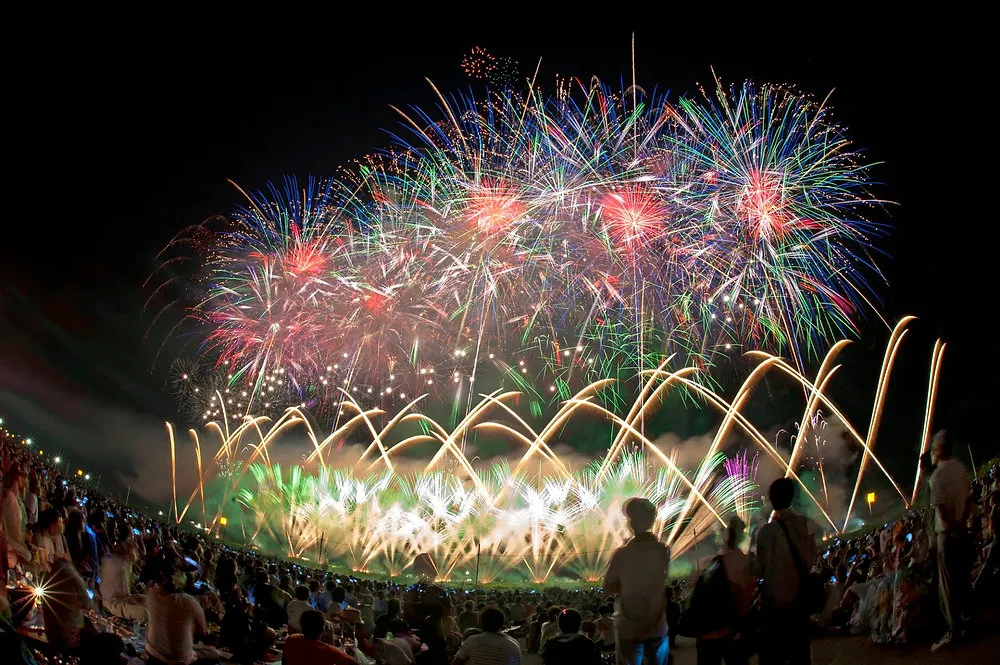
Behind every great fireworks display lies an impressive body of expertise: colour chemistry, firing mechanics, musical composition, site safety, regulations, transport, environmental impact, and staging. It is precisely this less visible but essential side that the International Symposium on Fireworks brings to light. Founded in Canada in the early 1990s, this symposium has brought together researchers, manufacturers, pyrotechnicians, show designers, distributors, representatives of public authorities and pyrotechnics enthusiasts for more than thirty years. At a time when major international competitions and shows, from Masters de Feu to the most renowned festivals, bring popular emotion into dialogue with technical excellence, this event serves as a reminder of an obvious truth: fireworks are an art, but also a science.
A Canadian birth for an event that has become global
The symposium’s history began in Montreal in 1992. It was originally launched by CERL, the Canadian Explosives Research Laboratory, a Canadian laboratory specialising in explosives research. The context was then favourable for an international gathering: fireworks were experiencing spectacular growth, competitions were multiplying, ignition technologies were evolving, audience expectations were rising and safety requirements were tightening. There was a clear need to create a shared space where professionals could exchange research, compare methods and advance the entire industry.
After the first five editions, the event’s administration was entrusted to a dedicated non-profit structure, the International Symposium on Fireworks Society. This organisation has continued to develop the congress and notably supported the sixth edition in Walt Disney World, Orlando. This handover marked an important step: the symposium was no longer merely a Canadian scientific initiative; it became a structured international platform, designed to last and to travel from country to country.
A crossroads between laboratory, workshop and open sky
The singularity of the International Symposium on Fireworks lies in its balance. It is not only about spectacle, nor only about technique. The themes covered span the entire pyrotechnic chain: product composition, material behaviour, mixture sensitivity, ignition systems, storage, transport, international standards, safety distances, incident analysis, risk reduction, as well as the history, aesthetics, storytelling and culture of fire. This interdisciplinarity is invaluable, because it reflects the reality of the pyrotechnician’s craft: a successful creation is always born from the meeting of scientific precision and artistic intent.
Within the symposium programme, presentations often take the form of technical papers or specialist talks. They may address colour chemistry, the reliability of aerial shells, smoke effects, computerised firing systems, designing a show from the ground or from the air, assessing site risks, applicable standards for professional pyrotechnics, or the role of fireworks in science education. These subjects may seem far removed from the emotion felt by the audience at the grand finale. Yet they are precisely what makes it possible: the more knowledge advances, the more the show gains in control, safety and refinement.
Host cities that map the geography of fireworks
Since Montreal in 1992, the symposium has travelled across several continents. Vancouver, Orlando, Halifax, Naples, Valencia, Shiga, Berlin, Porto, Malta, Changsha, Bordeaux, Omagari, Puerto Vallarta and Liling are among the cities that have hosted the event. This movement is far from anecdotal. It sketches a global map of pyrotechnics: Canada for its scientific origins and the influence of major competitions, Europe for its historical and regulatory traditions, Japan for the culture of hanabi, China for manufacturing and the ancestral heritage of powder, and the United States for the industrial and event scale of its shows.
Each host city brings its own context, professionals, constraints and sensibility. In Omagari, Japan, fireworks are rooted in a tradition of precision and contemplation. In Malta, they interact with a vibrant popular culture strongly tied to local festivities. In Bordeaux, in 2015, the 15th edition gave particular visibility to the French scene, with pyro-musical demonstrations and shows that allowed audiences to appreciate the diversity of international pyrotechnic styles. The symposium is therefore not just a conference held indoors: whenever conditions allow, it is accompanied by demonstrations that offer a concrete view of research, products and artistic signatures.
Bordeaux 2015, a landmark edition for the French industry
The 2015 Bordeaux edition holds a special place in the French memory of the event. Bordeaux and its region welcomed experts from several countries, as well as pyro-musical shows presented by French, Italian, Chinese and German companies. For France, whose pyrotechnic history is long, this event was an ideal showcase. It highlighted the vitality of a sector where historic names, creative companies, engineering firms, field technicians, sound designers and safety specialists all coexist.
This edition also showed how strongly fireworks engage with contemporary debates. Questions of environmental impact, waste management, noise, public safety and local regulation now accompany every major pyrotechnic event. The symposium’s role is precisely to address these topics without sidestepping them. The aim is not to freeze a tradition, but to adapt it: to fire better, design more precisely, reduce risks, document practices, share feedback and invent more responsible forms.
Why this symposium matters for fireworks competitions
For an international competition such as Masters de Feu, the relevance of such a symposium is obvious. A competitive fireworks display is judged not only by the intensity of its finale. It stands out through the coherence of its narrative, the quality of its musical synchronisation, the clarity of its scenes, mastery of height, colour choices, use of space, rhythm precision and impeccable firing safety. All these criteria rely on knowledge that events like the International Symposium on Fireworks help circulate.
Competition pushes pyrotechnicians to surpass themselves; the symposium gives them the tools to do so with rigour. The two worlds are complementary. On one side, the audience experiences the emotion of the show, the power of sound, the beauty of trajectories and the brilliance of colour. On the other, professionals exchange ideas on what makes that emotion possible: manufacturing processes, testing, standards, software, safety protocols, team organisation and the innovation of effects. Without this shared technical culture, pyrotechnic art could not evolve with the same level of excellence.
An art in motion, between heritage and innovation
Fireworks are often seen as an art of the moment: a few minutes in the sky, then night resumes its rights. The symposium reminds us, on the contrary, that this is a field with a long memory. National traditions, historic recipes, workshop gestures and local aesthetics meet the most current challenges here: automation, smart firing systems, smoke reduction, height control, incident analysis, new audience expectations, the integration of music and light, and adaptation to urban constraints.
This ability to bring together heritage and innovation explains the longevity of the International Symposium on Fireworks. For more than three decades, it has accompanied the transformation of a profession that has never stopped becoming more specialised. It shows that the magic of fire is never the result of chance: it is born from a demanding dialogue between researchers, manufacturers, pyrotechnicians, organisers and authorities. It is within this collective intelligence that the future of major open-air spectacles is being prepared — the ones that make us look up, hold our breath and turn an ordinary night into a shared memory.