Compiègne, Pierrefonds, Senlis, Chantilly: a weekend in Oise around Masters de Feu
On 8 September 2017, the second edition of Masters de Feu invited the public to extend the pyrotechnic experience with a heritage escape in Oise. From Compiègne to Chantilly, via Pierrefonds and Senlis, the region offers a rare concentration of royal, imperial, medieval and equestrian history.
On Friday 8 September 2017, Masters de Feu invited the public to Compiègne Racecourse for an evening devoted to pyrotechnic artistry, music and shared emotion. But the event also offered a compelling reason to stay in the Oise for an entire weekend. Less than an hour from Paris, Compiègne and its surroundings form an itinerary of exceptional richness: an imperial palace, a royal forest, a reimagined medieval castle, a Gothic town, a princely estate and grand stables. Before or after the fireworks, the spectacle continues in stone, gardens, vistas and the stories that shaped the history of France.
Compiègne, the natural starting point for a weekend between fire and heritage
Attending Masters de Feu in Compiègne first means entering a city whose identity is inseparable from great court occasions, sovereign stays and the forest. The racecourse, the setting for the pyrotechnic evening, is part of this generous landscape — elegant, open and steeped in greenery and equestrian tradition. For visitors coming especially for the event, Compiègne deserves more than a brief passage: it is best discovered on foot, from the historic centre to the château, in an atmosphere that is at once urban, imperial and woodland, and which gives the city its singular character.
The second edition of Masters de Feu in 2017 continued a landmark international competition bringing together fireworks houses, a jury and the public around a demanding brief: to create a complete pyrotechnic show that is rhythmic, legible and profoundly spectacular. In this context, extending the evening into a stay in the Oise turned a visit into a true escape. A day among monuments, an evening among fireworks: the combination is obvious in a region that has long cultivated a sense of staging, perspective and grand scenery.
The Imperial Palace of Compiègne, royal grandeur and Napoleonic memory
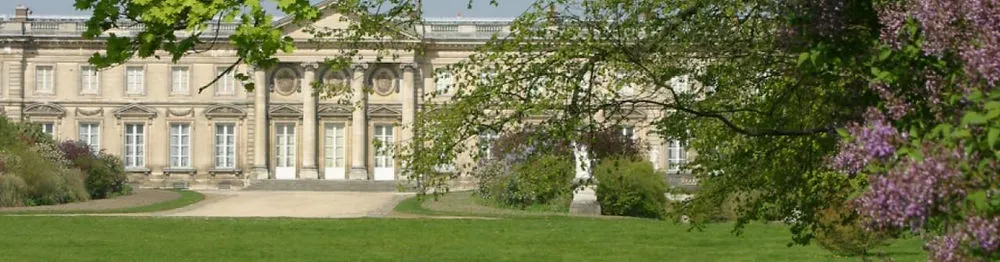
It is impossible to speak of Compiègne without pausing at the Imperial Palace. Built under Louis XV and Louis XVI, then extensively remodelled under Napoleon I and Napoleon III, the Château de Compiègne ranks among the great French royal and imperial residences, alongside Versailles and Fontainebleau. It was a place of power, representation and sociability, especially renowned for court stays during the Second Empire. Visitors will find long enfilades, state rooms, historic apartments and that French neoclassical architecture that favours clarity, balance and majesty.
The palace is as compelling for its architecture as for the atmosphere it preserves. In Compiègne, history is not reduced to a sequence of reigns: it is read in the décor, the uses, the volumes and the routes through the building. Admirers of imperial history will find a direct echo of Napoleon I and Napoleon III; the simply curious will discover a courtly art of living, shaped by ceremony, reception and intimacy. Before a pyrotechnic evening, this visit already creates a sense of solemnity: that of the great places where everything, from the façade to the salons, seems designed to impress without ever disturbing harmony.
Pierrefonds, Viollet-le-Duc’s dream castle at the edge of the forest
Just a few kilometres from Compiègne, Pierrefonds offers a spectacular change of scene. The castle, built at the end of the 14th century by Louis d’Orléans, was dismantled in the 17th century before becoming, in the 19th century, one of the major projects entrusted to Eugène Viollet-le-Duc by Napoleon III. More than a restoration, Pierrefonds is a learned reinvention: an ideal castle nourished by medieval references, archaeological research, romantic imagination and a highly personal vision of architecture. Its towers, ramparts, inner courtyard and decorations make it instantly recognisable.
A visit to Pierrefonds perfectly matches the spirit of Masters de Feu. In both cases, the emphasis is on technical mastery, dramaturgy and visual power. Viollet-le-Duc does not merely shore up ruins: he composes a narrative, arranges silhouettes and gives visitors the impression of stepping into a vision of the Middle Ages. Fireworks artisans, too, work with structure, rhythm, rising intensity and surprise. Between stone and sky, between architect and pyrotechnician, the same idea emerges: emotion begins when technique becomes spectacle.
Senlis, a royal and Gothic town to explore at a gentle pace
Further south, Senlis charms with another kind of grandeur: that of an ancient town, compact and cobbled, marked by traces of its Roman, medieval and royal past. Its architectural heritage is especially rich, with Notre-Dame Cathedral, the ramparts, Gallo-Roman remains, town houses and lanes that create a remarkably coherent setting. Here, the pleasure of visiting lies as much in transitions as in monuments: a façade, a gateway, a vista over pale stone, a bell tower glimpsed around a corner.
Notre-Dame Cathedral naturally forms the heart of the visit. Built from the 12th century onward, it belongs to the earliest days of Gothic art and preserves a particularly striking Virgin portal. Its silhouette, less vast than that of other French cathedrals, gains intensity from its place within the town. Senlis is best discovered without haste, through wandering: it reveals how the Oise can offer, within a relatively compact area, a synthesis of urban, religious and royal history. After the nocturnal brilliance of the fireworks, the town offers a softer light — that of ancient stones and quiet courtyards.
Chantilly, a princely estate, the Condé Museum and the capital of the horse
Chantilly completes the itinerary perfectly. The estate brings together a château, parkland, the Great Stables and the Condé Museum, one of the great art collections preserved in a princely setting. The site’s history is linked to the Princes of Condé and later to the Duc d’Aumale, who bequeathed the estate and its collections to the Institut de France. This transfer partly explains the site’s strength: Chantilly is not simply a château to admire, but a coherent heritage ensemble built around the residence, gardens, artworks, books, the horse and aristocratic memory.
The Great Stables, an 18th-century masterpiece, recall the central role of the equestrian world in Chantilly’s identity. Their monumental architecture, the Horse Museum and the nearby racecourse echo, in a way, the Compiègne setting of Masters de Feu. In this territory, open spaces are never neutral: they host ceremonies, races, shows and gatherings. A visit to Chantilly thus extends the sense of exception experienced the previous evening in Compiègne, in a different yet equally spectacular aesthetic.
Planning your getaway around Masters de Feu
To make the most of the weekend, the simplest option is to use Compiègne as your base. The city allows you to visit the palace, stroll through the centre or along the forest edge, and then head to the racecourse for the evening. The following day can be devoted to Pierrefonds, which is highly complementary thanks to its medieval imagination and its position near the forest. Senlis and Chantilly then make a harmonious pair for a day focused on Gothic architecture, collections, gardens and equestrian art. Depending on the pace you choose, the itinerary can be enjoyed over two intense days or three more comfortable ones.
This combination gives the Masters de Feu experience its full value. The competition is not only an evening show: it becomes the starting point for a broader discovery of the Oise, a department of castles, forests and historic towns. In 2017, the 8 September event already invited visitors to see Compiègne differently — not as a mere venue, but as the gateway to a region where the art of staging spans centuries. From imperial salons to the ramparts of Pierrefonds, from the lanes of Senlis to the Great Stables of Chantilly, the weekend makes one thing clear: in the Oise, heritage is a grand spectacle in its own right.