13 and 14 July 2017: two nights of fireworks across France
For Bastille Day 2017, fireworks lit up France across two evenings, from 13 to 14 July. From Paris to Marseille, from Bordeaux to Brest, and on to Compiègne, each city gave this beloved tradition its own color, rhythm, and setting.
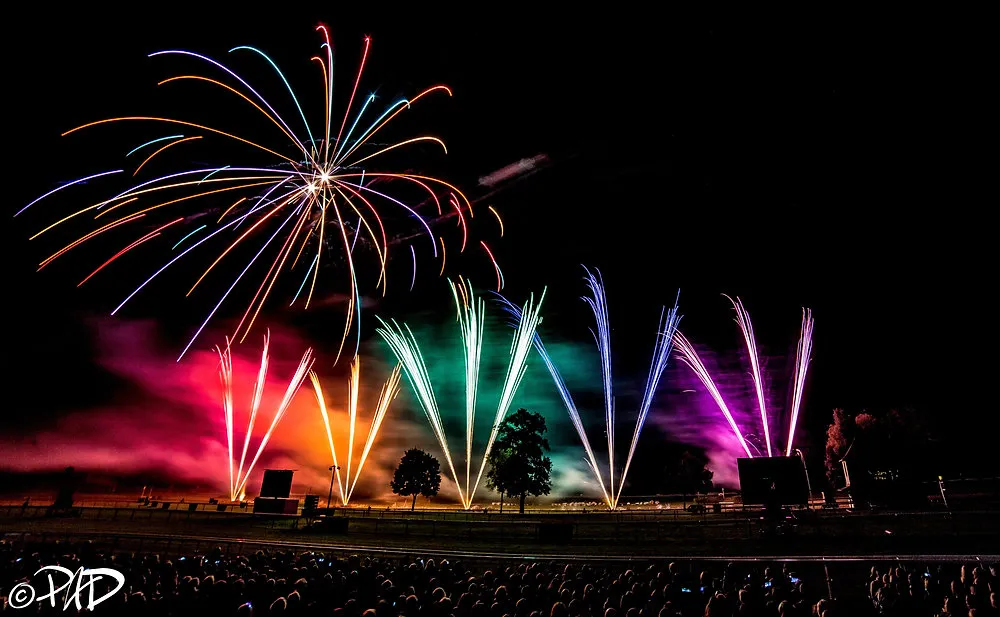
Two dates, one shared fervour. On 13 and 14 July 2017, the French sky ignited to the rhythm of Bastille Day celebrations. In major cities as well as mid-sized towns, along quays, in ports, on lawns and public squares, fireworks brought audiences together around a universal language: that of light, sound and shared emotion. For pyrotechnics enthusiasts, these evenings offer each year a privileged window onto the craftsmanship of fireworks makers, as well as the diversity of stagings imagined by local authorities.
Two evenings to celebrate Bastille Day
In France, Bastille Day is not limited to the evening of 14 July alone. Many municipalities choose to set off their fireworks the day before, on 13 July, to extend the popular momentum, facilitate local organisation or pair the pyrotechnic display with a dance, a torchlight procession, a concert or a family gathering. The result is a true weekend of lights, even when the calendar does not fall on a Saturday or Sunday: while one town prepares its show, another is already applauding the first bursts in the night.
This alternation creates a distinctive geography of celebration. The public can sometimes attend several shows over two days, families plan their evening around a viewpoint, photographers identify the horizon lines, and fireworks makers adapt their creations to the constraints of each site. A city-centre display does not speak the same language as one launched from a port, a river or a racecourse. Bastille Day thus offers an exceptional panorama of French pyrotechnics in real-world conditions, before large crowds that are often highly attentive.
Paris, the Eiffel Tower in Olympic colours
In Paris, the 14 July firework display remains one of the most watched pyrotechnic events in France. In 2017, the show was launched at 11 p.m. from the Eiffel Tower, with Ruggieri responsible for its creation. The chosen theme echoed the Olympic spirit, in a very particular context: Paris was then pursuing the momentum of the Olympic bid, ahead of the confirmation of the 2024 Games. The capital therefore used its most famous monument as a vertical stage, blending light tableaux, musical sequences and pyrotechnic scenes.
The Paris setting calls for a spectacular language of its own. The Eiffel Tower is not merely a launch structure; it becomes a staging partner. The effects must work with its metal framework, its perspectives, and the presence of the Champ-de-Mars, the Trocadéro and the Seine. In 2017, the large audience found this very Parisian combination once again: a major concert as a prelude, a collective anticipation, then the gradual blaze of the sky around the Iron Lady. For fireworks makers, Paris demands millimetric precision; for spectators, it offers an image that has become almost iconic of the national holiday.
Marseille, Bordeaux, Brest: three settings, three atmospheres
In Marseille, 14 July 2017 was part of a year of sporting promotion for the city, then European Capital of Sport. The fireworks display was announced under the theme “Marseille La Sportive,” a direction consistent with the identity of the Phocaean city that year. The Old Port, the façades, the quays and the reflections on the water give Marseille’s pyrotechnics a powerful dimension. Here, the show does not simply occupy the sky: it enters into dialogue with the sea, with the crowd gathered along the banks and with the very special energy of a city accustomed to major public gatherings.
In Bordeaux, the Garonne plays a similar role, but in a different atmosphere. The 14 July 2017 firework display was scheduled for the evening on the river, after the festivities organised around the celebration. Bordeaux’s quays offer a broad, almost panoramic view, where the bouquets are reflected in the water and highlight the city’s architectural lines. In this kind of setting, the success of a show depends as much on the choice of calibres and colours as on the way space is occupied: shell height, sequence rhythm, the length of silences, and the power of the final bouquet.
In Brest, the 13 July 2017 pyrotechnic event took place in a port environment, with the launch announced from the commercial harbour. The city has an obvious relationship with the sea, ships, basins and open horizons. The fireworks there take on a maritime dimension, enhanced by the movement of the public toward visibility areas and by the evening atmosphere along the quays. Ports are privileged stages for fireworks makers: they offer depth, reflective surfaces and visual breadth that magnify wide effects, cascades and fan-shaped sequences.
Compiègne, a popular gathering on the racecourse lawns
In Compiègne, the evening of 13 July 2017 confirmed the local attachment to major Bastille Day fireworks displays. The show, presented on the lawns of the Putois racecourse, was announced under the title “Opéra céleste” by ArtEventia. More than 10,000 people were expected for the event, preceded by entertainment and a festive route to the launch site. In a city where Masters de Feu have established a demanding pyrotechnic culture, this kind of popular evening is a reminder that fireworks remain as much an art of gathering as a technical performance.
The choice of a racecourse is no coincidence. The space can welcome a large audience, provide the necessary safety distances and offer a scenography that is clear to all. Unlike a display launched in the heart of a dense urban fabric, the site opens the view and lets the effects breathe. Spectators can perceive the structure of the show: the introduction, the build-up in intensity, the musical pauses, the changes in colour, then the finale. For a city like Compiègne, this configuration fosters a strong, accessible and family-friendly collective experience.
Pyrotechnics, an art of precision in the service of emotion
Behind the apparent spontaneity of fireworks lies a considerable operation. Fireworks makers work well in advance on the design of the show, the choice of products, the musical synchronisation when there is one, the installations, the firing angles and the regulatory constraints. Each site imposes its own rules: proximity to the public, buildings, trees, waterways, wind, emergency access, traffic, schedules and noise pollution. When the evening comes, the public sees colours; the teams, meanwhile, have anticipated hundreds of parameters.
Bastille Day is also a special moment because it places pyrotechnics before a very broad audience. Some come for the tradition, others for the music, and still others for the final image that will define the summer. A successful 13 or 14 July display must therefore speak to everyone: legible without being simplistic, spectacular without being confusing, rhythmic without overwhelming the eye. The finest creations are those that transform a few minutes of night into a lasting memory.
A living heritage, from one city to the next
The 2017 edition of the 13 and 14 July celebrations reminded audiences of the richness of French pyrotechnic stages. Paris offered monumental scale, Marseille Mediterranean energy, Bordeaux riverside elegance, Brest maritime depth and Compiègne the conviviality of a major local gathering. Everywhere, the same promise: to look up together, suspend time and rediscover, in the sky, a shared emotion. It is this alchemy between technique, territory and audience that makes fireworks far more than entertainment: a true popular art.