Casting 2017: Masters de Feu launched their second selection
In the fall of 2016, just weeks after a remarkable first edition in Compiègne, Masters de Feu were already preparing their second event. The challenge: select three new pyrotechnic houses set to compete for the 2017 Silver Master.
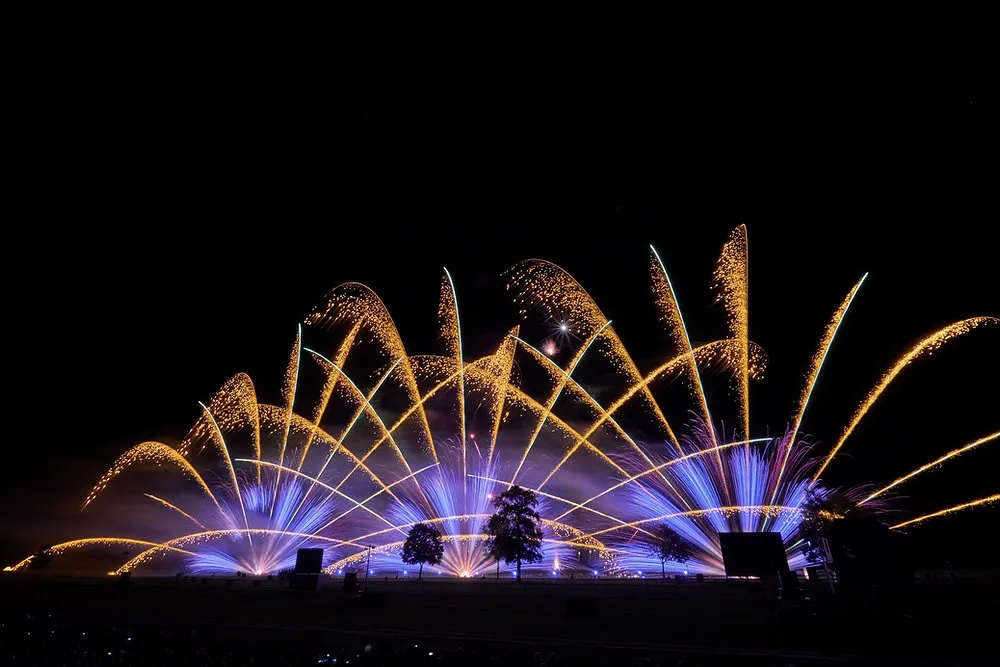
The second edition of Masters de Feu was written long before the first salvos lit up the sky over Compiègne. As early as November 2016, the organization entered a decisive phase: identifying, approaching and selecting the pyrotechnic houses capable of meeting the demands of this international competition. Following the founding success of the first edition, the casting for the Silver Master 2017 had to confirm the event’s ambition: to bring together, on a single open-air stage, top-level fireworks artists, each defending both an artistic vision and technical expertise.
A second edition eagerly awaited after the momentum of 2016
On 24 September 2016, Masters de Feu had established its signature at the Compiègne racecourse: an international competition, a single venue, a spectacular evening and three teams invited to create around a set theme. The first edition, won by Parente Fireworks for Italy, had laid the foundations of a format immediately understandable to the public: three years of selection to designate Silver Master winners, followed by a grand finale awarding the Gold Master.
In this context, the casting for the second edition was far more than an administrative formality. It shaped the very identity of Masters de Feu. The challenge was to find candidates capable of living up to the competition’s growing reputation, of meeting a demanding set of specifications, and of offering the public a personal reading of pyrotechnics: rhythm, colour, musical precision, dramatic structure, variety of effects and emotional intensity.
Casting, the first step in a tightly framed competition
Selecting a fireworks house for Masters de Feu requires several criteria to be brought together. Reputation matters, of course, but it is not enough. The teams must be able to design a coherent show within a limited timeframe, work to a shared theme, master musical synchronisation and fit into a technical setup shared with the other competitors. The goal is fairness: the same playing field, the same duration, the same general constraints, but radically different artistic worlds.
This casting logic gives the competition its particular tension. The fireworks companies are not simply presenting a display; they are defending a composition. Each sequence must be conceived as a visual sentence. Shells, Roman candles, comets, mines and façade tableaux become the elements of a score. In Compiègne, the show is judged not only by the scale of the finale bouquet: it is assessed in its progression, its silences, its breaks, its transitions and the way light follows the music.
Three countries to write the next chapter of the Silver Master
The selection announced in autumn 2016 would, a few months later, lead to a European line-up. For the 2017 edition, three pyrotechnic houses were selected: HC Pyrotechnics for Belgium, Nanos Fireworks for Greece and Smart Pyrotechnics for the United Kingdom. Each arrived with its own identity, its own firework culture and its own approach to pyrotechnic storytelling. This diversity was at the heart of the project: bringing different schools, sensibilities and performance traditions into dialogue within a single competitive framework.
The theme chosen for this second edition, “The secrets of European capitals”, opened up a vast imaginative landscape. It invited fireworks artists to explore the memory, architecture, urban myths and musical atmospheres of the continent. Such a theme demanded real interpretive finesse: it was not simply a matter of illustrating monuments or flags, but of translating the spirit of European capitals through colour, pace, contrast and the staging of the sky.
Compiègne, an open stage for major pyrotechnic writing
The Compiègne racecourse offers Masters de Feu a setting particularly well suited to this type of competition. Its scale makes it possible to welcome a large audience while giving fireworks artists the space they need to deploy shows of significant scope. In this configuration, the creations can breathe: wide tableaux fully unfold, depth effects become visible, and synchronisation reads with remarkable clarity from the audience areas.
This venue choice also contributes to the event’s atmosphere. Masters de Feu is not an isolated fireworks display staged at the end of a celebration. It is a full evening, conceived as both a cultural and spectacular event. The opening, the competitors’ performances, the anticipation of the verdict and the final bouquet form a narrative. The casting of the fireworks artists is therefore decisive: it shapes the pace of the evening and the range of emotions offered to the audience.
A jury and the public at the heart of the decision
The competition is based on a balance between expertise and feeling. Performances are assessed by a jury made up of personalities and representatives of the public, with criteria related to aesthetics, emotion, synchronisation and the variety of effects. This popular dimension is part of the DNA of Masters de Feu: the audience is not merely witnessing a technical demonstration, but becoming a witness to a competition where sensitivity matters as much as virtuosity.
In 2017, the jury for the second edition was chaired by Sandra Lou, alongside figures from the artistic, media, cultural and local spheres. This composition reflects the desire to bring different perspectives together. A pyrotechnics professional does not view a fireworks display in the same way as a spectator attending with family; an artist may not seek the same nuances as an elected official or a journalist. It is precisely this diversity that gives the verdict its significance.
From the casting announcement to the Greek victory
The archive published on 8 November 2016 therefore marks a pivotal moment: the point at which the second edition began to take shape, still behind the scenes. At that stage, the candidates had not yet been presented to the public. The organisation was preparing the selection that would define the following year’s line-up. With hindsight, the importance of this step is clear: it made it possible to bring together three strong competitors and to confirm the competition’s international reach from its second year.
On 8 September 2017, Greece, represented by Nanos Fireworks, won the Silver Master of this second edition. This victory earned it a place in the Gold Master final in 2019, alongside the other winners from the selection years. The promise made at the 2016 casting was fulfilled: Masters de Feu was not simply repeating a successful event, but gradually building a structured, identifiable and closely followed competition.
A casting that reveals the ambition of Masters de Feu
Looking back at this announcement today helps us understand the discreet mechanism that comes before major fireworks evenings. Before the applause comes the paperwork, the technical exchanges, the artistic choices, the safety constraints, the programming decisions and the desire to surprise. A successful casting is not immediately visible; it is felt when the time comes, as three worlds follow one another without ever resembling each other, and the audience feels it has witnessed a true competition, not just a succession of fireworks.
The preparation of the second edition therefore played an essential role in consolidating Masters de Feu. It confirmed that Compiègne could become a lasting gathering place for major European fireworks houses, with a clear format and a progression toward the Gold Master. Through this casting, the entire philosophy of the competition was already taking shape: select the best, impose a common framework, then let the sky decide between visions.