How to design a fireworks display: the art of composing the sky
A great fireworks display is never just a succession of spectacular explosions: it is shaped, paced, and narrated. From the music to the choice of effects, from color to firing height, every decision builds the audience’s emotion.
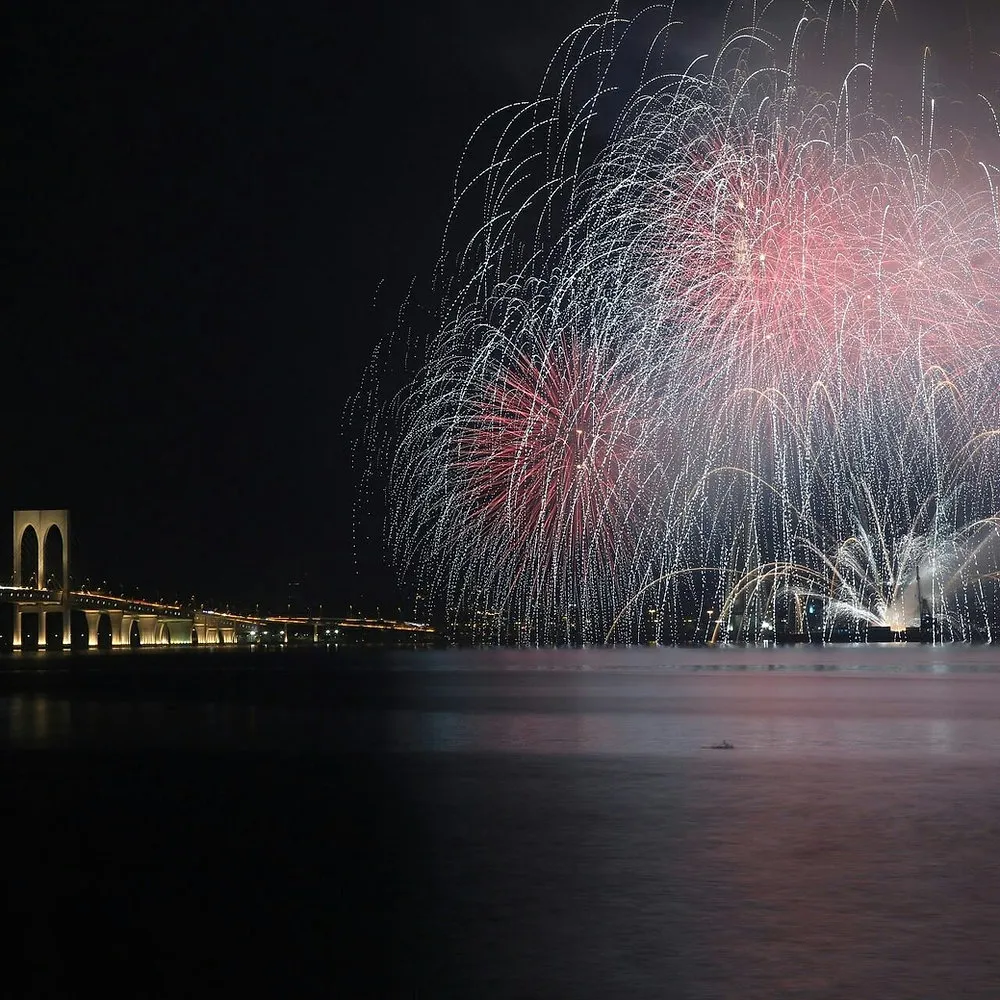
The most attentive spectators know it: the fireworks that linger in memory are not necessarily the loudest, nor those that fire the most shells. They are the ones that seem to breathe. An introduction, surges, breaks, silences, surprises, a finale. Like a play, a ballet, or a symphonic work, a pyrotechnic show is built before it lights up. It is first imagined on a table, in software, in the mind of a pyrotechnician who sees the sky as an open stage.
Designing fireworks is writing a story in the sky
A successful fireworks display has its own dramaturgy. It is not about lining up effects, but about giving the audience the feeling of a journey. The eye must be guided, surprised, taken forward again. Emotion arises from this progression: a beginning that sets the atmosphere, a rise in intensity, more intimate sequences, then a conclusion capable of releasing the accumulated energy.
The pyrotechnician therefore works like a stage director. He chooses heights, colors, shapes, densities, and rhythms to compose successive tableaux. A very open sky, with large golden crowns, tells a different story from a low, fast, nervous sequence crossed by red comets and white crackling effects. Each effect has a personality. The challenge is to make them converse.
Music, the backbone of the pyrotechnic show
In a musical fireworks display, the soundtrack is not just accompaniment. It becomes the very structure of the show. The accelerations, pauses, accents, changes in orchestration, and breathing spaces in the music determine the pyrotechnic choices. A percussion удар may call for a clean, high shell. A string phrase may inspire a golden cascade. An electronic break may trigger a line of mines or a highly graphic sequence.
The hardest part is avoiding overly mechanical illustration. A shot placed exactly on every note can become predictable. Conversely, a show disconnected from the music loses its emotional power. The right balance lies in listening: understanding the piece’s deeper movement, identifying its tensions, its surges, its breathing spaces, then choosing the effects that carry that energy into the sky.
Colors and effects: the pyrotechnic painter’s palette
Fireworks are designed with a very precise palette. Reds often bring warmth, power, and sometimes a sense of solemnity. Blues, rarer and more delicate to achieve with intensity, create an impression of depth. Greens add brilliance, golds establish prestige, whites sharpen the outlines and enhance brightness. When well controlled, color changes give the tableau an almost cinematic dimension.
To this chromatic palette is added the vocabulary of forms: peonies, palms, willows, chrysanthemums, hearts, rings, comets, volcanoes, mines, candles, sparkling trails, or crackling effects. Some effects fill the sky in width, others draw a vertical line, while others create a slow rain that seems to suspend time. Pyrotechnic design is born from the combination of these forms, their scale, and their placement.
Height, depth, and the firing area
The sky is not a flat surface. A strong show uses several levels of reading. Low effects, close to the ground, bring speed and precision. Mid-level effects structure the eye. Large high shells open up space and create moments of grandeur. By combining these levels, the pyrotechnician composes a luminous architecture that can be vertical, panoramic, enveloping, or highly frontal.
The venue plays an essential role. At the Compiègne racecourse, for example, the openness of the site makes it possible to imagine a broad, readable show for a large audience, with a depth of field suited to grand compositions. In other settings, a façade, a body of water, an urban square, or a landscape feature impose different choices. Designing fireworks always means designing for a real space, with its distances, constraints, viewing angles, and safety rules.
Rhythm: the art of not giving everything too soon
One of the most common mistakes is trying to impress from the very first seconds. Yet a fireworks display needs progression. If the show begins at maximum intensity, it becomes difficult to surprise later. The best pyrotechnicians know how to pace it. They set a promise, build anticipation, offer an initial peak, ease back, then rise even higher.
This control of rhythm is crucial in an international competition such as the Masters de Feu. The audience judges not only the force of the finale. It feels the overall coherence, a pyrotechnic house’s ability to uphold an artistic line, vary the register, and turn a technical constraint into shared emotion. A show that is too uniform tires the eye. A well-paced show, on the other hand, gives the impression that time passes very quickly.
From the preparatory sketch to synchronized firing
Before the night of the show, the fireworks already exist in the form of a plan. Pyrotechnicians establish a firing sequence, step by step. They determine which products will be used, when, from which position, at what height, and for how long. Design software now makes it possible to visualize the choreography, synchronize launches with the music, and verify the coherence of the tableau before installation on site.
But technology does not replace the artistic eye. It helps refine, secure, and synchronize. The intention remains human. It is the pyrotechnician’s vision that decides a silence must be respected, that an effect should last one second longer, that one color should give way to another, that a finale should burst in width rather than height. Designing fireworks is a meeting point between calculation and intuition.
Safety, the invisible condition of beauty
A pyrotechnic show can only inspire wonder if it is rigorously controlled. Safety distances, firing zones, weather conditions, wind direction, installation stability, and ignition procedures are all part of the creative process. These elements are not always visible from the stands, but they determine everything else.
This requirement explains why major shows are entrusted to trained professionals accustomed to working with authorities, organizers, and technical teams. The poetry of the sky relies on an extremely concrete discipline. Behind every perfectly synchronized bouquet are hours of preparation, checking, and anticipation.
What distinguishes a spectacular fireworks display from an unforgettable one
A spectacular fireworks display impresses. An unforgettable one moves. The difference often lies in the coherence of the design. The audience may not know the names of the effects, nor perceive every technical choice, but it instinctively understands when a show has been thoughtfully crafted. It feels the build-up in tension, the delicacy of a softer passage, the boldness of a break, the generosity of a finale.
Designing fireworks, then, means composing with time, space, color, music, and collective expectation. It means accepting that everything disappears as soon as it appears, yet the whole leaves a lasting trace. At the Masters de Feu, this ambition takes on a special dimension: each pyrotechnic house comes to defend a vision, a culture, a signature. And when the design is right, the sky over Compiègne does more than shine. It tells a story.