Fête nationale: fireworks professionals prepare the great 14 July show
As the Fête nationale approaches, fireworks professionals enter a decisive period: one in which technique, creativity and safety come together to make cities across France come alive. In Compiègne, this excitement also heralded the event of 24 September 2016, the inaugural edition of Masters de Feu at the Hippodrome.
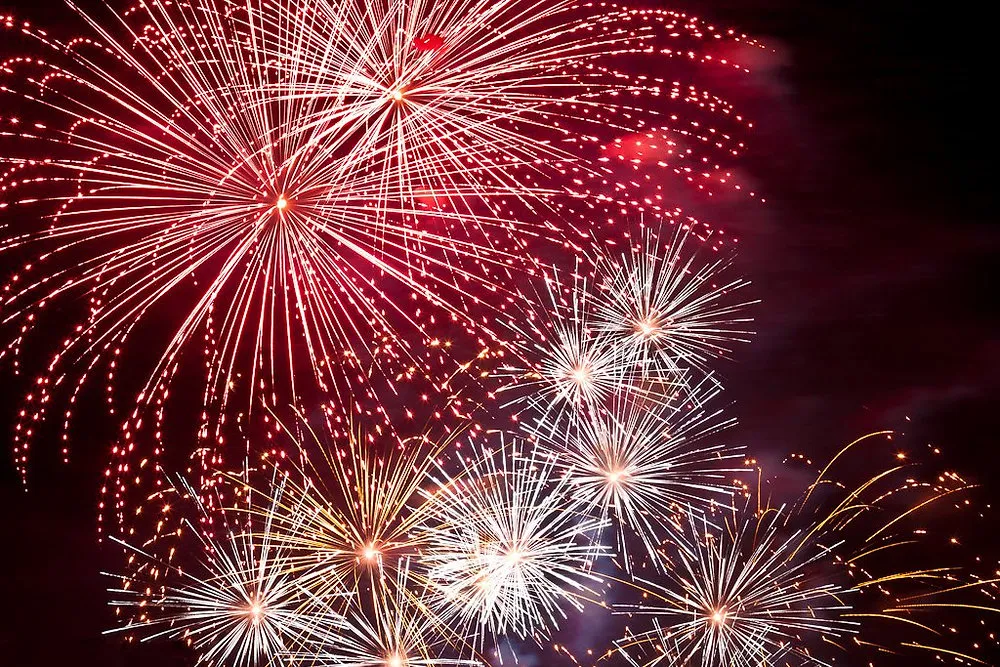
Every summer, as 14 July approaches, France prepares to look to the skies. In major cities as well as smaller towns, fireworks become the luminous signal of Bastille Day, that suspended moment when night comes alive, façades glow with color, and families gather on quays, squares, lawns, or city heights. Behind these few minutes of wonder lies a demanding, spectacular, and often overlooked profession: that of the pyrotechnician. In 2016, this peak season resonated especially with the birth of Masters de Feu in Compiègne, an international pyrotechnic competition set to bring together several European fireworks signatures on 24 September at the Hippodrome.
14 July, a highlight for all French pyrotechnics
For the public, the 14 July fireworks are a popular, festive, almost familiar event. For pyrotechnicians, they are a very different undertaking. The weeks leading up to Bastille Day concentrate a key share of the annual workload: designing the sequences, choosing effects, preparing soundtracks, securing administrative authorizations, scouting sites, delivering equipment, installing on location, carrying out safety checks, and coordinating with local authorities. Every city expects a show in its own image: solemn in Paris, seaside and cinematic in Cannes, heritage-led in Compiègne, intimate or family-oriented in many French towns.
This diversity is what makes 14 July so rich. There is no single national fireworks display, but hundreds of luminous stories, adapted to different places, audiences, and constraints. A body of water, a field, a park, an hippodrome, a château, or an urban perspective are all approached differently. The pyrotechnician must work with safety distances, visibility, prevailing winds, firing height, proximity to the audience, and the desired duration. The result seems fluid, almost natural. Yet it is the product of millimetric precision.
The pyrotechnician, creator of the sky and a high-precision technician
Fireworks fascinate because they bring together two dimensions rarely united with such intensity: rigor and poetry. A pyrotechnician is at once a safety professional, a stage director for space, and a visual composer. They know the products, calibers, angles, rhythms, colors, openings, delays, and sequences. But they must also feel the emotion of a show: allow for silences, build momentum, surprise without overloading, and offer a finale that carries the audience without losing the clarity of the whole.
On the occasion of 14 July, this responsibility is heightened by the symbolic dimension of the celebration. The audience does not come merely to witness a technical display. They come to share a collective moment. Children may discover their first major fireworks show, residents reconnect with a city ritual, and visitors leave with a lasting nocturnal image of the place. Pyrotechnics then become a common language, immediate and capable of bringing thousands of people together in the same admiring silence, then in the same applause.
From Bastille Day to international competitions: the same standard of excellence
If the 14 July fireworks highlight pyrotechnicians’ expertise across the country, pyrotechnic competitions reveal the most ambitious artistic dimension of the craft. This is precisely the spirit of Masters de Feu, conceived as a major international gathering centered on creation, musical precision, and visual power. The promise is simple, the execution complex: bring together top-level pyrotechnic houses, impose a common framework, and let their personality speak in the sky.
The first edition of Masters de Feu, scheduled for 24 September 2016 at the Hippodrome in Compiègne, followed this logic. After the end of the Nuits de Feu in Chantilly, the Oise region reconnected with a tradition of major international competitions. Compiègne offered an ideal setting: a vast site, a city with a strong heritage, a family-oriented and curious audience, and a framework suited to large-scale shows. The event already aimed to go beyond the simple fireworks display and offer a true evening of pyrotechnic creation.
Compiègne 2016: four interpretations of fire to discover
The news published in June 2016 announced four different creative approaches to be unveiled in Compiègne. The program for this first edition was built around an international competition bringing together three European countries: Austria, Spain, and Italy. The pyrotechnicians were to defend their vision around a common theme, “Draw me nature,” and attempt to win the Silver Master. France, meanwhile, was announced out of competition for the closing fireworks display.
This format gives a competition its full appeal: everyone starts from the same framework, yet no two signatures are alike. One pyrotechnician may favor the finesse of the tableaux, another the force of rhythm, a third the depth of color or the vertical architecture of the show. The imposed theme becomes a fruitful constraint. Nature can be translated into luminous blooms, waves of color, gentler breaths, mineral bursts, or sequences evoking wind, water, forest, earth, or sky. The audience immediately perceives this diversity of temperaments.
A popular show, but never improvised
One of the great strengths of fireworks is that they seem accessible to everyone. There is no need to know pyrotechnic vocabulary to feel the beauty of a golden fountain, a blue comet, a red bouquet, or a silver finale. Yet the more effortless the show appears, the more important the preparation behind it. Pyrotechnicians must design sequences that can be understood from afar, in the moment, by a large audience. They must also adapt to the constraints of the site and to safety requirements, which always take precedence over the desired effect.
In Compiègne as elsewhere, this standard turns the show into a collective project. Organizers, technical teams, security services, local authorities, partners, artists, and pyrotechnicians all contribute to the success of the evening. The public sees only the outcome: the opening of the night, the first salvo, the rising emotion, the final bouquet. But each shot also tells the story of women and men who have spent hours preparing a few minutes of grace.
A summer in the sign of pyrotechnicians
Every year, Bastille Day reminds us how central fireworks are to the French imagination. They are at once ceremony, entertainment, living heritage, and the art of the instant. In 2016, the approach of 14 July offered an ideal occasion to honor these creators of the sky, in high demand throughout the summer and capable of turning an ordinary evening into a collective memory. A few weeks later, Masters de Feu were to extend that momentum in Compiègne, no longer only in the spirit of a national celebration, but in that of an international artistic competition.
From local fireworks to a major competition, the same fascination remains: seeing night become a stage, seeing light draw an emotion, seeing the audience hold its breath before applauding. This is the alchemy pyrotechnicians cultivate with patience, precision, and imagination. And it is this alchemy that Masters de Feu has chosen to place at the heart of its identity: celebrating those who do not merely illuminate the sky, but know how to give it a soul.