J-15 vor den Masters de Feu: Compiègne bereitet sich auf seine erste große pyrotechnische Nacht vor
Am 24. September 2016 bereitet sich die Pferderennbahn von Compiègne darauf vor, die erste Ausgabe der Masters de Feu zu empfangen, einen internationalen Wettbewerb der Pyrotechnik. Fünfzehn Tage vor dem Ereignis werden Spanien, Italien und Österreich erwartet, um um den Silver Master zu konkurrieren, bevor ein Abschlussfeuerwerk außer Konkurrenz von Frankreich präsentiert wird.
In fifteen days, the sky over Compiègne will rise to a new scale. On 24 September 2016, the racecourse will host the very first edition of the Masters de Feu, a new international competition devoted to the art of pyrotechnics. The event is already shaping up to be one of the major highlights of the autumn season in Oise: three European houses will compete for the Silver Master, while France will close the evening with a non-competitive show.
As the date draws nearer, excitement is building across the site. International pyrotechnicians are preparing to take over the racecourse, install their equipment, set up the firing zones, check the systems and fine-tune the last details of their luminous scores. A competition firework display is far more than a succession of explosions: it is crafted like a timed work of art, conceived in space, driven by music and carried by visual storytelling.
A much-anticipated first edition at the Compiègne racecourse
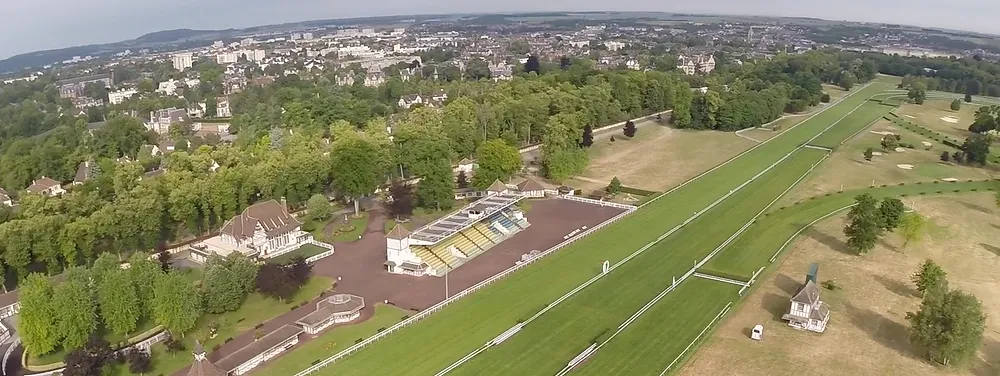
For Compiègne, this first edition marks the arrival of an ambitious format: an international competition, open to the public, in a venue capable of hosting a large-scale scenography. The racecourse offers a setting particularly well suited to this kind of show: a vast firing area, open sightlines and a layout that allows spectators to fully enjoy the pyrotechnic tableaux.
Fifteen days before the event, the project enters its most concrete phase. Technical plans give way to on-site logistics. The teams are preparing public welcome areas, traffic flow, access points, reserved zones, seating areas and safety instructions. In a pyrotechnic show, this invisible organisation is essential: it determines both the smooth running of the evening, the comfort of spectators and the precision of the artistic setup.
The artistic start is scheduled for 21:30. By then, once natural light has fully faded, the pyrotechnicians will have a black sky—ideal for revealing the subtlety of the colours, the sharpness of the trajectories and the depth of the effects. It is in this controlled darkness that the Masters de Feu will reveal their identity to the public: a demanding, spectacular competition, yet also accessible, designed for enthusiasts and families alike, all gathered for a great open-air evening.
Spain, Italy, Austria: three visions for the Silver Master
The competition will bring together three European countries: Spain, Italy and Austria. Each will present a distinctive approach to pyrotechnics, with its own style, sense of rhythm and way of telling a story in the sky. The Silver Master will reward the most accomplished performance, at the intersection of artistic creation, musical synchronisation and technical mastery.
Spain holds a major place in fire culture. The country has a particularly strong pyrotechnic tradition, nourished by major popular celebrations and by an almost instinctive relationship with sound, light and colour. Italy, too, arrives with a long and prestigious history in the world of fireworks, often associated with elegant compositions, rich colour palettes and a flair for the grand finale. Austria, for its part, will bring another signature, one that is expected to emphasise precision, structure and a strong sense of staging.
Beyond the sporting rivalry, this contest promises above all a dialogue between pyrotechnic schools. Three teams, three sensibilities, one sky: that is the real strength of an international competition. Spectators will not simply see successive fireworks, but distinct artistic proposals, comparable in format and ambition. The jury will face the delicate task of separating shows in which every second counts, where the alignment between music and effects must remain flawless, and where audience emotion is always a valuable indicator.
France closes the evening, out of competition
The evening will not end with the competition itself. After the performances by the three contenders, France will present a non-competitive pyrotechnic show to bring the event to a close. This final sequence will serve a special purpose: to extend the emotion, offer the audience one last highlight and end this first edition on a spectacular note.
A closing display does not follow quite the same logic as a competition firing. It is not primarily aimed at convincing a jury according to precise criteria; its first goal is collective delight, shared excitement and an immediate lasting memory. It can afford to be freer, more festive, sometimes more generous in its intensity. For a first edition, this choice gives the evening an extra sense of pace: after the tension of the competition comes the pure pleasure of a great French finale.
Ticketing: the last opportunities to attend the evening
Public interest is already confirmed. The Carré Or and Chaises categories have been sold out for several weeks, a sign of early enthusiasm for this first edition. For spectators who still wish to attend the Masters de Feu, two options remain available: grandstand seats and lawn tickets.
In the grandstand, around 200 seats are still available. They provide seating, even if without a backrest. This category may suit spectators who want a structured place while still enjoying a comfortable view of the show. The other option is to book a lawn ticket. This freer format invites everyone to settle directly on the grass, ideally with a blanket, to enjoy the evening in a friendly, relaxed atmosphere.
One practical point is worth recalling: folding chairs are not allowed on the lawn. This rule supports safety, circulation and clear visibility for everyone. At an event bringing together a large audience, a simple setup makes movement easier and reduces obstacles on the ground, especially after dark.
Preparing your visit: safety, access and audience comfort
Fifteen days before the event, the organisers invite spectators to plan their visit in advance. As with any major gathering, restrictions will be in place at the site entrance on the evening of the Masters de Feu. It is therefore recommended to check the instructions before departure, limit unnecessary items and allow enough time to arrive well ahead of the start to avoid rushing.
This preparation matters all the more because the evening takes place outdoors, on a large site with different reception areas. A blanket for lawn tickets, clothing suited to the late-September weather, a little patience at the security checks and attention to the on-site signs will all help make the experience more enjoyable. The goal is simple: to let everyone focus on what matters most, the show.
The Masters de Feu begin with a powerful promise: to make Compiègne a stage open to the world’s leading pyrotechnicians. Fifteen days before the first firing, the signs are already there: very advanced ticket sales, teams from several countries, a site under preparation and an audience ready to attend. On 24 September 2016, the racecourse will be more than the setting for a fireworks show; for one night, it will become the theatre of a luminous competition where technique, music and emotion meet in the sky.